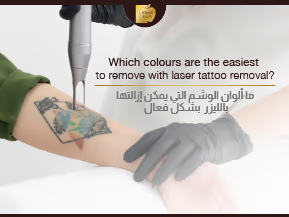
Laser tattoo removal is a popular method for eliminating unwanted ink, but not all colors fade equally. The effectiveness depends on how each pigment absorbs laser light. Generally, darker colors like black and dark blue are the easiest tattoo colors to remove, while lighter shades like yellow and white are more stubborn.
What Is Laser Tattoo Removal?
Laser tattoo removal is a medical procedure that uses concentrated light beams to break down tattoo ink beneath the skin. The body's immune system then clears away the fragmented ink. It's most effective on dark pigments for effective tattoo pigment removal, especially black, and typically requires multiple sessions for complete or significant tattoo fading colors.
How Does Laser Tattoo Removal Work?
- Laser Firing:
The laser therapist directs the laser beam to the area to be removed, where the different colors of ink in the tattoo absorb the laser beam.
Each color in the tattoo is absorbed by a specific laser beam.
- Ink Fragmentation:
The laser emits high energy that breaks down the ink into very small particles. These particles become small enough to be eliminated through the body's lymphatic drainage.
- Skin Healing:
After treatment, the body gradually cleanses and breaks down the ink, and the skin heals over several weeks between sessions.
What Are the Advantages of Laser Tattoo Removal?
- Highly Effective: Lasers can remove most tattoos, including difficult colors like blue and green.
- Fewer Side Effects: Compared to traditional tattoo removal methods (such as surgery or creams), lasers are less harmful.
- Safe Procedure: Laser tattoo fading is safe if you choose to have it performed at a trusted center and by an experienced laser specialist.
- Permanent Results: Although some tattoos may require several sessions to completely disappear, and some tattoos fade and become almost invisible, the results of laser tattoo removal can be permanent in most cases.
Number of Sessions Required for Laser Tattoo Fading
The number of sessions depends on the size of the tattoo, its color, the depth of the ink, and the skin type. Typically, a person may require between 4 and 8 sessions for optimal results.
Possible Side Effects of Laser Tattoo Removal:
- Redness and Swelling: You may experience some temporary redness or swelling in the treatment area.
- Blistering: In some cases, small blisters may appear, similar to those seen when you pour hot water on your hand, but these blisters usually disappear over time.
- Skin Discoloration: In some cases, a temporary change in skin color may occur, but this gradually fades.
Important notes:
- Laser tattoo removal is not recommended for people with certain skin conditions.
- The treatment must be performed by specialists in accredited clinics to ensure the safety of the procedure.
What Is the Effect of Ink Color and Laser Removal?
Ink color greatly affects laser tattoo removal effectiveness. Dark colors like black and dark blue absorb laser energy best, making them easier to remove. Lighter colors such as yellow, green, and white reflect more light, making removal more difficult and often requiring more sessions with specialized lasers.
The best colors for tattoo removal are black, dark blue, dark green, and red as they absorb laser energy more effectively and respond well to common laser wavelengths.
The effect of lasers on tattoo colors varies depending on the color of ink used in the tattoo, as the laser works differently with each color due to its absorption of different wavelengths of light. Here's how the laser removal effectiveness by colors differs:
1. Black Tattoos
- Laser Interaction: Black is the most responsive color to lasers. The laser absorbs light easily from black ink particles, making black tattoos the easiest to remove.
- Number of Sessions: Black tattoos typically require the fewest sessions compared to other colors.
- Results: Black tattoos are easier to remove, with effective and often permanent results.
2. Blue Tattoos:
- Interaction with Lasers: Lasers have some difficulty removing blue compared to black, but there are special lasers that can target this color effectively.
- Number of Sessions: Blue tattoos may require additional sessions compared to black tattoos to achieve good results.
- Results: Blue tattoos can be effectively removed with a specific laser, such as a Q-switched laser.
3. Green Tattoos:
- Interaction with Lasers: Green is one of the most challenging colors for laser tattoo removal. This color does not absorb light efficiently in most lasers.
- Number of Sessions: Green tattoos may require multiple sessions to achieve satisfactory results, and in some cases, may not be completely removed.
- Results: Results may be slow and less effective, but there is a special laser that can handle green tattoos better. This is a Q-switched laser with a wavelength of 532 nm.
4. Red Tattoos:
- Interaction with Lasers: Red has a moderate ability to absorb laser light. Removing red tattoos is more difficult compared to other colors, such as black.
- Number of Sessions: Red tattoos may require additional sessions to completely remove the color.
- Results: The results are good, but there may be some partial color reappearance after sessions.
The Kyocera laser can remove red tattoos better than other lasers.
5. Yellow Tattoos:
- Laser Interaction: Yellow is one of the most difficult colors to remove with a laser. Removing yellow tattoos requires a laser specifically designed to remove the yellow ink. The Kyocera laser is typically used to remove yellow tattoos.
- Number of Sessions: Yellow tattoos may require more sessions to achieve acceptable results.
- Results: It can be difficult to completely remove, but it may gradually fade with repeated sessions.
6. Orange Tattoos
- Laser Interaction: Orange tattoos react to lasers similarly to red tattoos, meaning they may require several additional sessions to remove.
- Number of Sessions: Like red tattoos, orange tattoos may require multiple sessions to remove.
- Results: The results are reasonably effective, but removing orange tattoos requires additional sessions.
7. Purple or Violet
- Laser Interaction: Purple responds similarly to blue and requires a specific type of laser to interact with it. This is a Q-switched Nd-YAG laser with a wavelength of 1064 nm.
- Number of Sessions: Purple tattoos may require more sessions than other colors, such as black.
- Results: In most cases, purple can be removed effectively, but it may take longer.
8. Light Colors (such as Pink)
- Laser Interaction: Light colors, such as pink and other muted colors, are more difficult to remove because they do not absorb laser light as well.
- Number of Sessions: They require more sessions because the laser is more attracted to dark colors than light colors, reducing its effectiveness on light colors.
- Results: In some cases, the light color may persist even after several sessions.
FAQs
Q: Is Laser Tattoo Removal a Safe Procedure?
A: Yes, laser tattoo removal is one of the safest and most effective tattoo removal procedures if performed at a trusted facility by a qualified practitioner.
Q: What is the Best Laser for Blue Tattoo Removal?
A: The 1064nm wavelength is considered the best option for tattoo ink colors removal, which includes black, blue, deep purple, and other dark colors, while the 532nm wavelength is best for red ink.
Q: Does Laser Tattoo Removal Completely Remove Tattoos?
A: Yes, tattoos may disappear completely after several laser sessions, but the results depend on several factors that may affect the effectiveness of the laser in tattoo removal. These factors include the colors used in the tattoo, the depth of the ink in the skin, the age of the tattoo, the laser used, and the body's response to the laser.
Q: What are the Techniques for Tattoo Color Removal?
A: Techniques for tattoo color removal include laser removal, the most common method using Q-switched or picosecond lasers to break down ink; surgical excision, which involves cutting out the tattoo; and dermabrasion, which sands off skin layers.
Q: What are the Most Difficult Types of Tattoos to Remove?
A: Some types of tattoos are difficult to remove, such as those using metallic ink, light green, light blue, and permanent makeup. Light colors such as white, yellow, light blue, and pink are the most difficult to remove.
Conclusion
Tattoo removal results vary depending on the color of ink used. Dark-colored tattoos, such as black, fade easily, while lighter colors, such as red, blue, green, and yellow, require more sessions. Laser tattoo removal is an effective and safe treatment for removing unwanted tattoos. However, it must be performed under the supervision of a specialist to achieve the best results and minimize potential risks.
At Adam and Eve Specialized Medical Center, we provide the best laser devices with various wavelengths and high efficiency to remove all types of tattoos safely and effectively.
Don't let your old tattoo bother you. If you no longer like it or want to get rid of it, we are here to help you get rid of it.
Key takeaways
- Follow personalized care plans and medical guidance
- Consult a licensed practitioner for tailored recommendations
- Prioritize hydration, balanced recovery, and clinician aftercare
This article is general information and does not replace an individual consultation. Suitability, risks and expected outcomes are discussed with your clinician.